

Flemish lace
Flemish lace, captured in clay
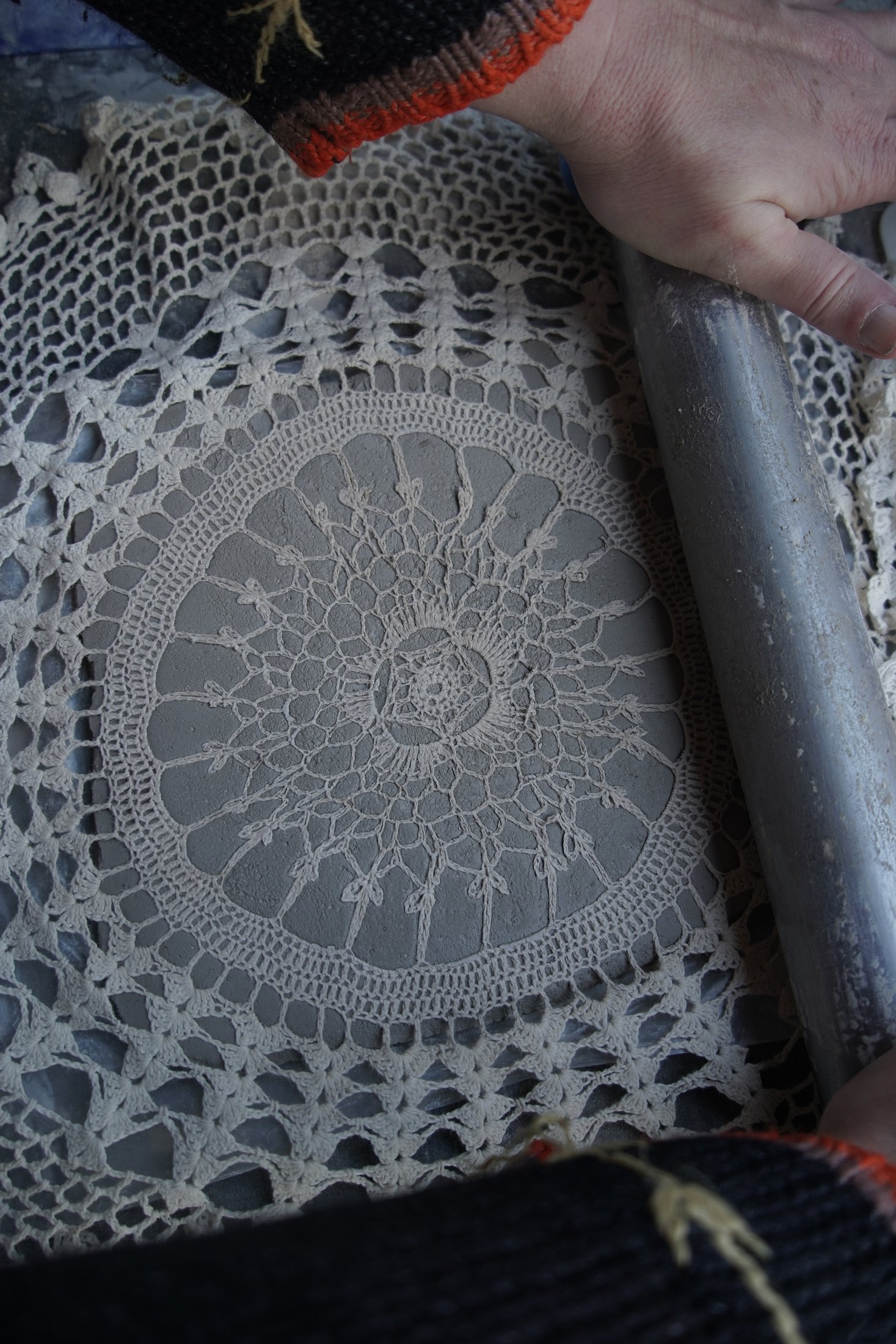
We roll old lace and crochet into fresh clay. The thread leaves its pattern behind, and once fired and glazed, a piece of Flemish handcraft tradition is kept in the tile.
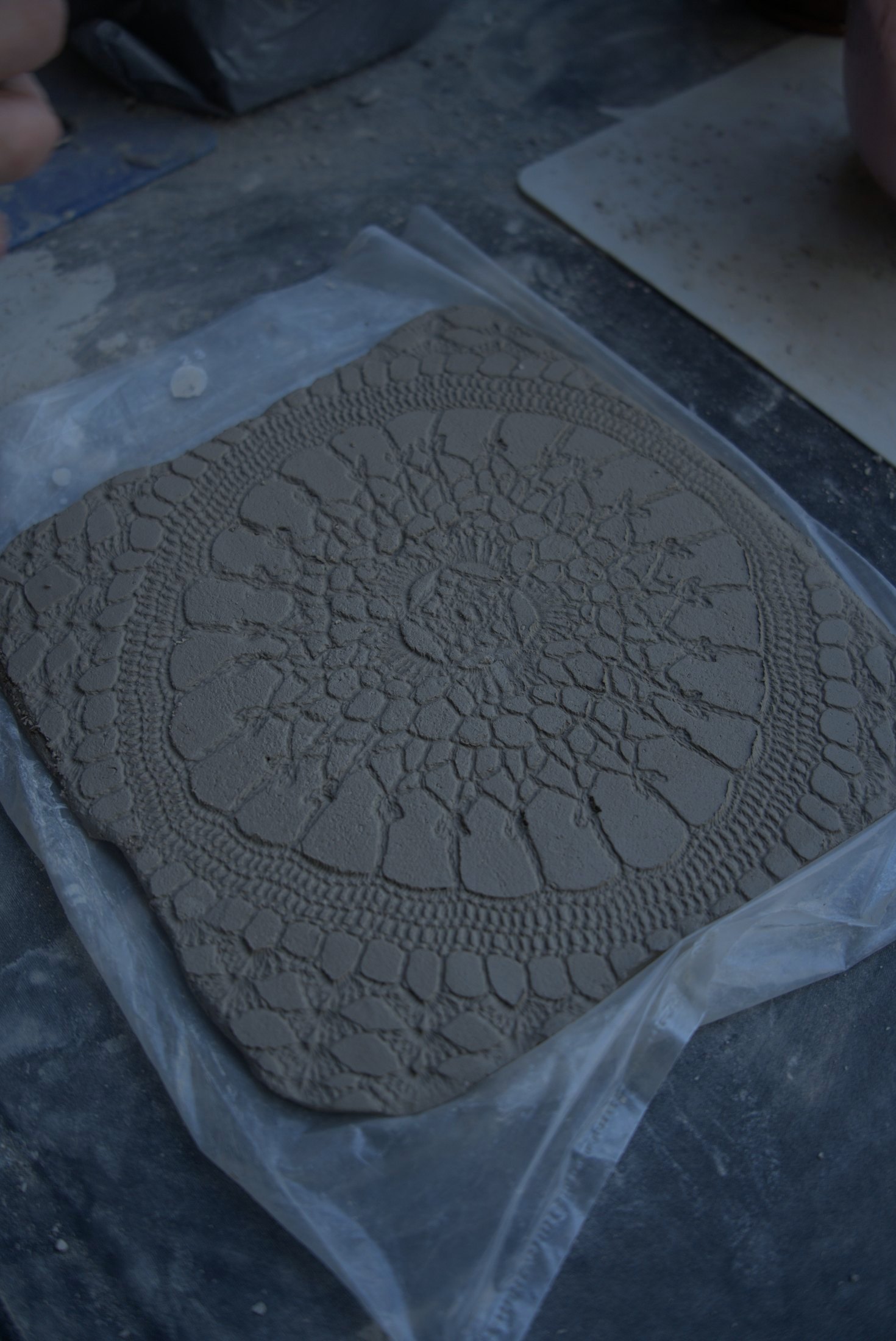
First the clay is rolled into an even slab. We lay a piece of lace on top and roll over it firmly and evenly. When we gently lift the fabric, every stitch, loop and knot is left in the clay.
Then we cut the tile to size, let it dry slowly and give it a first firing. When glazed, the glaze runs deeper into the lines of the lace and stays thinner on the raised parts, so the pattern shows up in colour.
A centuries-old tradition
From the 16th century, Flanders was one of Europe’s great lace centres. Bruges bobbin lace and Mechelen lace were sold far beyond its borders.
The work of many hands
In the 19th century, tens of thousands of women and girls in Flanders made lace, often in lace schools and for very little pay. Their work was fine, slow and skilled.
New life in clay
We reuse old lace and crochet. A grandmother’s doily gets a second life as relief in your kitchen or bathroom.
Why we are called Vlaamse Tegelmeesters
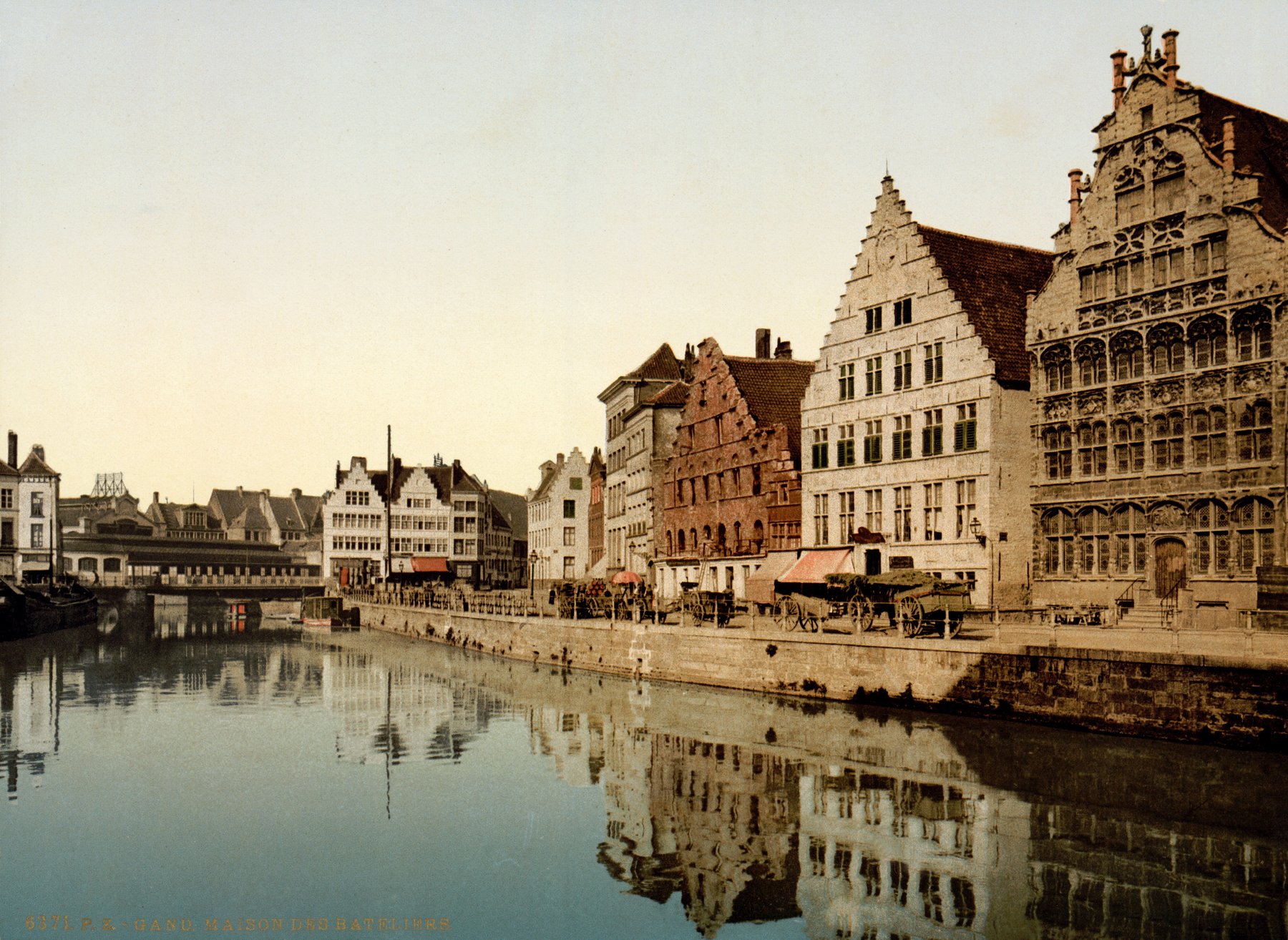
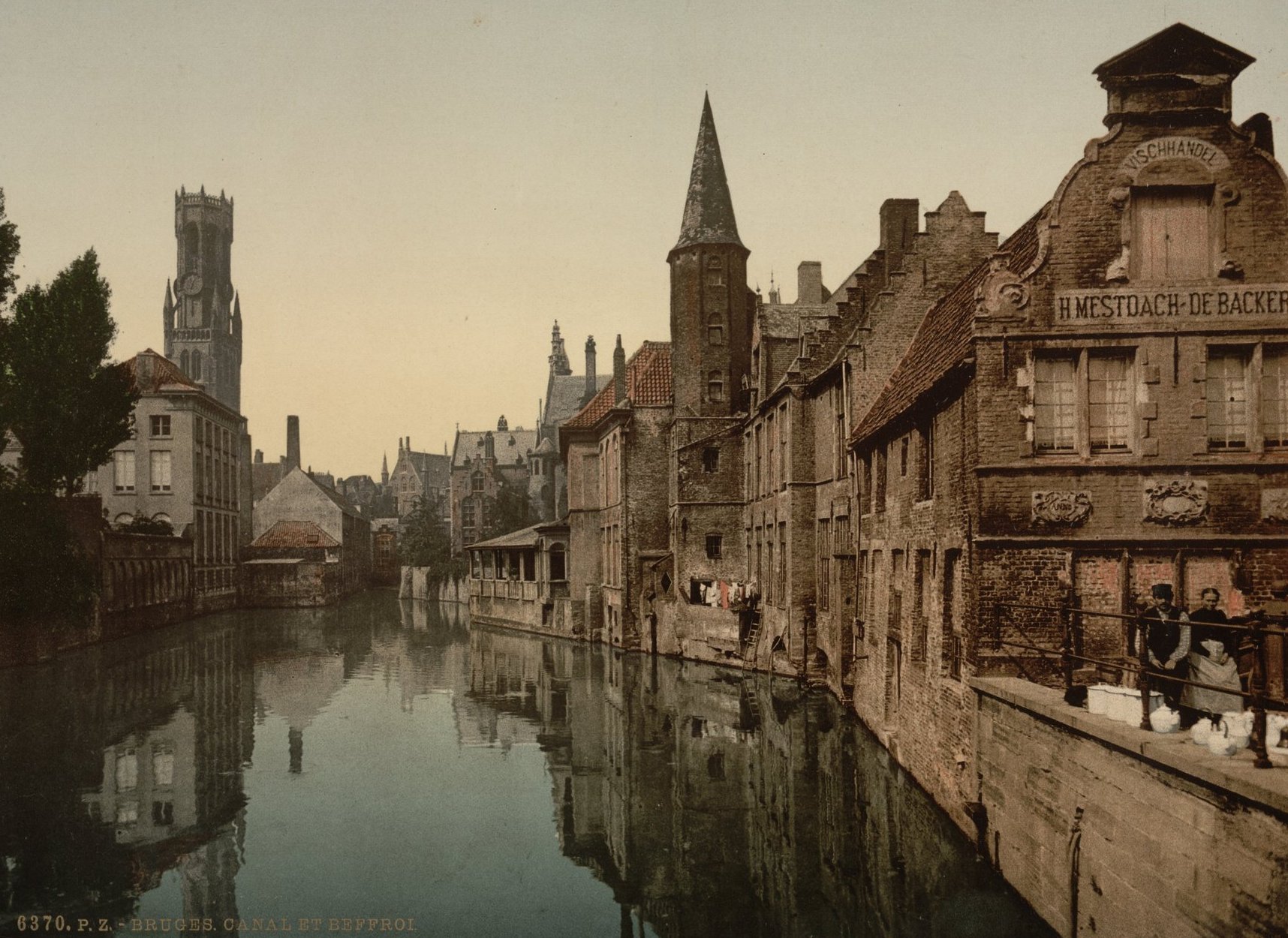
Vlaamse, meaning Flemish, because everything happens here: in our atelier in East Flanders, between Ghent and Bruges, cities where lace, textiles and craft carried the economy for centuries. And because we build on what Flemish hands have made for generations, like the lace that now sits in our tiles.
Tegelmeesters, meaning tile masters, because in the old craft guilds of Ghent and Bruges a master was someone who knew their trade from start to finish. That is the bar we set ourselves: making every tile ourselves, from clay to glaze, with the care the craft deserves.
ProcessHandmade tiles
View tile collections
A tile with your own lace?
Do you have a piece of lace or crochet with a story? As custom work, we can press it into clay. Please get in touch at least 3 weeks before installation.